Executive AI Coaching, 1-on-1
1-on-1 AI Coaching for Executives: What It Is, What It Costs, and How It Compares
Executive AI coaching means one of two things: an AI app that coaches you on leadership, or a person who teaches you to use AI on your own work. Zaigo Coaching is the second: 1-on-1 sessions with Pete Enestrom, from $1,000, in person in Greenwich, CT and New York City or remote.
1-on-1 with Pete Enestrom, on your actual work

Written by Pete Enestrom
Yale & Columbia, ex-Microsoft & Intel · 1-on-1 AI coaching for executives

Your coach’s background
Zaigo Coaching at a glance
- Format
- 1-on-1 with Pete Enestrom. A person, not an app. Hands-on, on your own work.
- Price
- $1,000 for the 2-hour Deep Dive. $3,500 for the half-day Intensive.
- Duration
- A 2-hour session or a half-day.
- Location
- In person in Greenwich, CT and New York City, or remote anywhere in the US.
- Tools covered
- Claude, ChatGPT, Gemini, Perplexity, Cursor and custom AI workflows, picked for what's useful in your work.
- First step
- A complimentary 30-minute intro call, so we can make sure it's the right fit before you pay anything.
What does "AI coaching for executives" mean?
"AI coaching for executives" is used for two different things. The first is software. ALEX from Admired Leadership, CoachHub's AIMY and BetterUp's AI coaching are apps: you talk to an AI, and the AI coaches you on leadership, habits and decisions. If you search for an executive AI coach, most of what comes back is this kind of product.
The second meaning is a person who teaches you to use AI. That's what I do. I sit with you, look at how you actually work, and coach you hands-on with tools like Claude and ChatGPT on your real email, board materials, memos and research. The goal is that you can do the work yourself afterward, without me in the room.
Neither meaning is better in general, because they solve different problems. An AI coaching app helps with how you lead. A person teaching you AI helps with how you use the tools in your own job. If your goal is to get good at AI on your own work, a person working with you on that work is the more direct route.
How does 1-on-1 AI coaching compare with the other options?
These are the six ways executives usually learn AI, side by side. I've only listed a price or a duration where the provider publishes it on its own website, and every one is linked.
| Option | Examples | Format & time | Published price | Works on your own files? |
|---|---|---|---|---|
| Teach yourself | ChatGPT, Claude | Your own time | Free plans (ChatGPT, Claude). Claude Pro $20/month | Yes, if you bring them |
| AI coaching apps | ALEX, CoachHub AIMY, BetterUp | In the app, on demand | See provider | Not the purpose: they coach leadership |
| Online courses | Coursera, OpenAI Academy | Self-paced video (about 7 hours for AI For Everyone) | Free to $59/month | No, course exercises |
| University programs | MIT Sloan, Berkeley, Columbia, Wharton, Harvard | 6 hours online to 4 days in person | $1,750 to $10,550 | Partly |
| Team workshops | Trainers, including me | Half or full day | Varies | Partly, shared with the group |
| 1-on-1 coaching | Zaigo Coaching (me) | 2 hours or a half-day, Greenwich, CT, NYC or remote | $1,000 or $3,500 | Yes, that's the point |
- Prices and durations were checked on each provider's own website on October 7, 2026. University programs range from MIT Sloan's on-demand Generative AI Business Sprint ($1,750, about 6 hours over 30 days) to Berkeley's 3-day AI for Executives ($6,500) and Columbia's 4-day Leadership Intelligence in the Era of AI ($10,550). Providers change these, so check the linked page before you decide.
- I couldn't confirm a published price on the official sites of Wharton, Harvard, ALEX, CoachHub or BetterUp, so none is listed for them.
What does a 1-on-1 AI coaching session look like?
The Deep Dive is two hours, 1-on-1, on your real workload. No slides, no audience, no homework. Here's the shape of the two hours, so you know what you're booking.
First 30 minutes: the workflow audit
We map where your week actually goes: the recurring writing, reading, prep and follow-up. Then we mark the tasks AI can take a first pass on. The audit also sets your boundaries: what never goes into the tool under your company's rules.
The middle hour: hands-on with your files
We open your real documents and work the most valuable workflow from the audit, live. You drive. I watch how you prompt and correct it in the moment: more context, a clearer brief, firmer pushback on the first draft.
Final 30 minutes: your personalized action plan
We finish with your personalized action plan. Every prompt that worked in the session gets saved into it, written with placeholders, so the next use takes minutes instead of a blank page.
The half-day Intensive goes further
The Intensive includes everything in the Deep Dive, plus setting up your own AI workflows hands-on and a tailored playbook.
What do executives work on in a session?
Executives work on whatever is on their desk that week. A session runs on your material, not on a sample case, so the list below is a set of typical examples rather than a fixed curriculum. We start with the work that takes the most of your time.
- Email: the difficult note you've rewritten four times, and the inbox that eats your morning.
- Board prep: turning a full board pack into a one-page pre-read, then asking the tool to play the skeptical director before the real directors do.
- Memos and reports: first drafts in your voice, and tighter edits of the drafts your team sends up.
- Research: a market, a competitor or a candidate, synthesized in minutes, with sources you can check.
- Excel and numbers: using AI in Excel to write formulas and explain a spreadsheet you inherited.
- Meetings and decisions: notes turned into decisions and follow-ups, and a pre-mortem on the plan before it's announced.
Who is 1-on-1 AI coaching for, and who isn't it for?
I'd rather you pick the right format than book the wrong one with me. Here's the honest dividing line.
A good fit if
- You run an owner-led or mid-sized company, or sit in its C-suite.
- You want hands-on help on your own work, not a lecture about AI in general.
- You've tried the tools, and the habit didn't survive your calendar.
- You're not technical. If you can use email and a web browser, you can learn this.
Probably not the right fit if
- You want a certificate or a credential. A university program is the better choice.
- You want to learn in a cohort, alongside peers from other companies.
- You'd rather teach yourself and have the time to. The guides on this site are free.
- You want AI systems built for your company. That's what my team at Zaigo does.
Can you use AI on sensitive or confidential documents?
You can use AI on sensitive documents with judgment. The rule I give every executive: treat anything you paste into an AI tool as shared with an outside vendor, because it is. What changes the risk is the plan you're on and the settings you choose.
On consumer plans, what you type may be used to improve the service unless you turn that off in the data controls. Business and enterprise plans from OpenAI, Anthropic and Google work under a different default: customer content isn't used to train the models. Terms change, so check the current policy for your plan before you rely on it.
Some material should stay out of AI tools unless your company has business accounts and a written policy that allows it: personal data about employees or customers, anything under NDA, and live deal terms. When in doubt, strip the names and figures and ask the structural question. In a session, we agree on those boundaries under your company's rules before we open any files. For the details, read ChatGPT privacy in plain English and Is ChatGPT safe?.
Is executive AI coaching worth it?
Executive AI coaching is worth it for some people and not for others, and I'd rather tell you which one you are than sell you a session you don't need.
Teaching yourself is enough if you have time to experiment and the habit is already sticking. The 30-day path in my AI for executives guide is free and works on the free versions of Claude and ChatGPT. A self-paced course or a university program is the better buy if you want vocabulary, strategy frameworks or a credential.
1-on-1 coaching makes sense when you've already tried the tools and stopped, when most of your week is reading, writing, prep and decisions, and when the open questions are specific to your company. Those questions don't have generic answers. If you're not sure which group you're in, the 30-minute intro call is free, and if a course is the right next step for you, I'll tell you that.
- Have you tried ChatGPT or Claude and stopped using them within a few weeks?
- Is most of your week reading, writing, prep and decisions?
- Do you want the skill on your own documents rather than on practice exercises?
- Does a credential matter more to you than the hands-on skill? If so, choose a program.
Who is Pete Enestrom?
I'm Pete Enestrom: Yale undergrad, Columbia MBA, exited VC-backed founder, formerly at Microsoft and Intel, based in Greenwich, CT. More about my background.
Start here
Book a complimentary 30-minute intro call
We'll talk through your work and see whether a 2-hour session or a half-day fits, before you pay anything.

Your coach
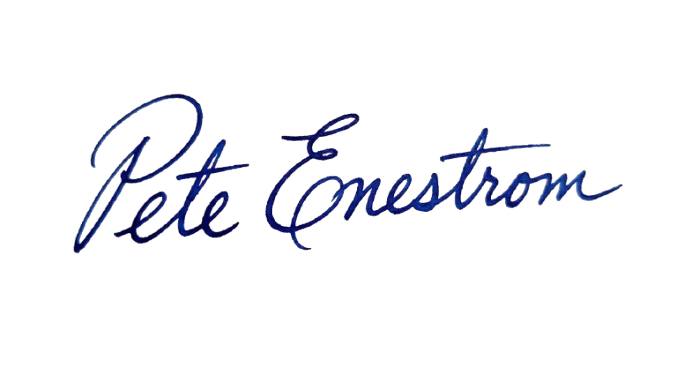
Coached by Pete Enestrom
Yale and Columbia grad, former Microsoft and Intel, and a venture-backed exited founder. Pete has spent the last four and a half years going deep on every major AI tool, and he teaches the way operators learn: on your real work, at your pace, with nothing assumed.
Common questions
Straight answers, the way I'd give them across a table.
Executive AI coaching is worth it when you've tried the tools and the habit didn't stick, and when you want the skill on your own documents. If you have time to experiment and you're making progress alone, teaching yourself is enough. If you want a credential, a university program fits better. The complimentary 30-minute intro call is there to work out which applies to you.
An AI coaching app, such as ALEX from Admired Leadership, CoachHub's AIMY or BetterUp's AI coaching, is software that coaches you on leadership. A human AI coach is a person who teaches you to use AI tools like Claude and ChatGPT on your own work. Zaigo Coaching is the second kind: 1-on-1 sessions with Pete Enestrom, in person or remote.
With Zaigo Coaching, a 2-hour 1-on-1 session costs $1,000 and a half-day costs $3,500. Both start with a complimentary 30-minute intro call. MIT Sloan's online Generative AI Business Sprint (about 6 hours) is $1,750, and Columbia's 4-day in-person program is $10,550. Those are group programs; a 1-on-1 session is built on your own work.
No. If you can use email and a web browser, you can learn this. Claude and ChatGPT are chat windows: you type what you need in plain English and the tool writes back. The sessions are about your work, not about code.
You can bring real work. Before we open any files, we agree on what stays out of the tools under your company's rules. As a general rule, personal data, material under NDA and live deal terms stay out of AI tools unless your company has business accounts and a written policy that allows them. More in ChatGPT privacy in plain English.
Either. I'm based in Greenwich, CT, and meet in person in Greenwich, CT and New York City. Remote sessions anywhere in the US use the same format over video, with a shared screen.
Claude, ChatGPT, Gemini, Perplexity, Cursor and custom AI workflows, picked for what's useful in your work. The core skill is briefing the tool well, so it carries over to Microsoft Copilot and the other assistants.
Yes. Team workshops are scoped to your team, in person in Greenwich, CT and New York City or remote. Mention it on the intro call. Individual depth for the principals can follow in 1-on-1 sessions.
Keep reading
For Your Role
AI for Executives: What Real Fluency Looks Like for Business Leaders
AI for executives means fluency, not a certificate: what fluency looks like for a CEO or president, and the five leadership conversations AI now touches.
ReadTraining
AI Classes in NYC: A Business Leader's Guide to Learning AI
AI classes in NYC come in three honest formats: classroom courses, team workshops, and 1-on-1 coaching on your real work. A plain guide to choosing among them.
ReadResource
ChatGPT Privacy, in Plain English: What Really Happens to What You Paste
ChatGPT privacy in plain English for business owners: what happens to what you paste, the real risks, the settings to check today, and rules to hand your team.
Read